Richard Henriquez
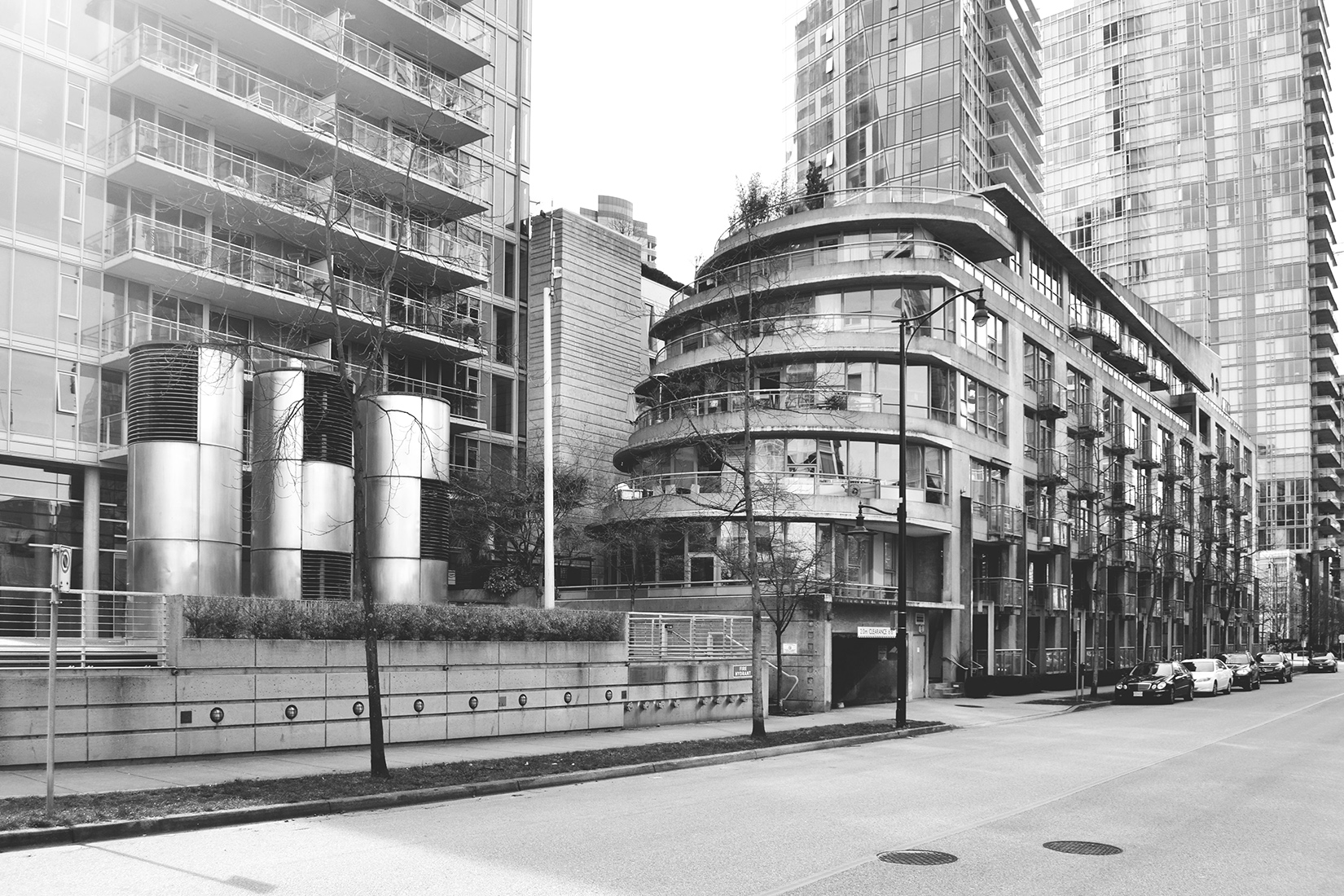
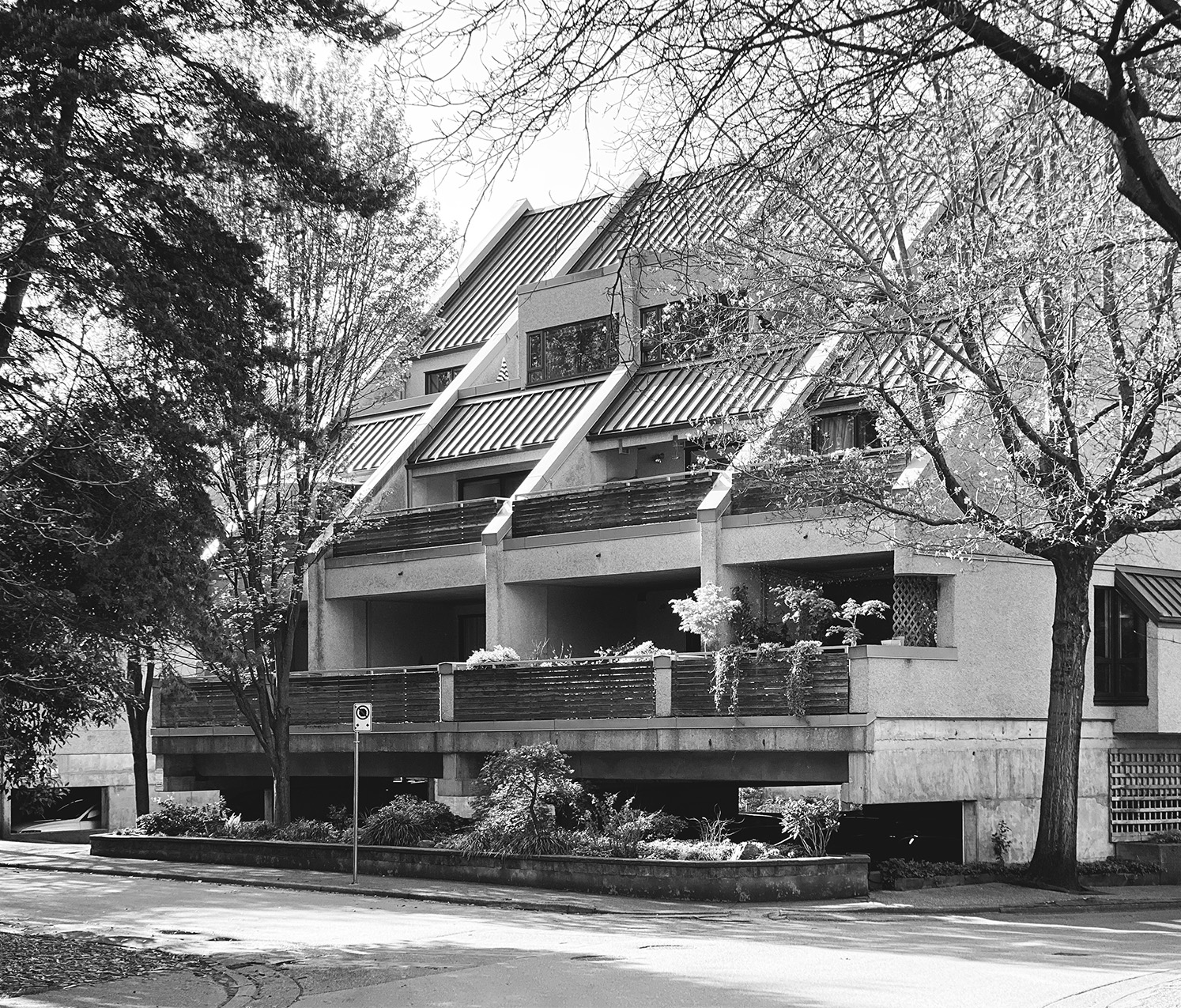
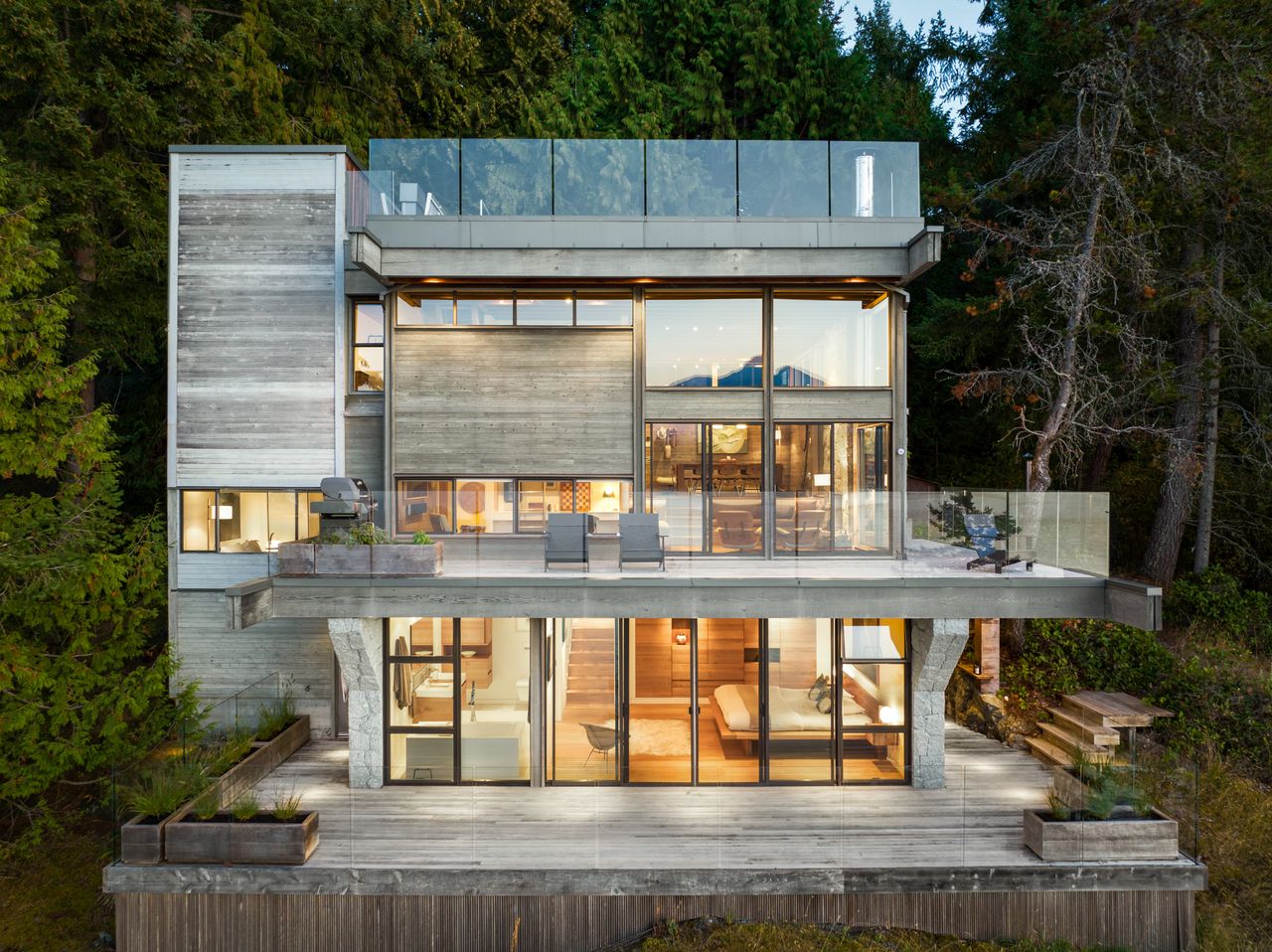
Few Canadian architects have influenced contemporary urban design more than Richard Henriquez. Over the past 50 years, his imaginative approaches have shaped the architectural character of Vancouver and drawn worldwide attention.
Born in Jamaica, Richard came to Canada as a young man to study architecture at the University of Manitoba. He quickly distinguished himself, winning the Royal Architectural Institute of Canada Student Medal and the University of Manitoba’s Faculty of Architecture Thesis Prize. After graduation in 1964, Richard then continued his studies at the Massachusetts Institute of Technology, where three years later he received a Master of Architecture degree specializing in urban design.
After moving to Vancouver, Richard launched the practice that is now Henriquez Partners Architects. He soon began a prolific evolution beyond the modernist style so prevalent in the 1960s. Perhaps his greatest accomplishment is his influence on the development of Vancouverism, a distinctive form of high-density urban design that combines slim towers, low-rise buildings, parks and view corridors to create intimate, livable neighbourhoods. Vancouverism is now widely regarded as one of the reasons the city is consistently rated as one of the best places to live in the world.
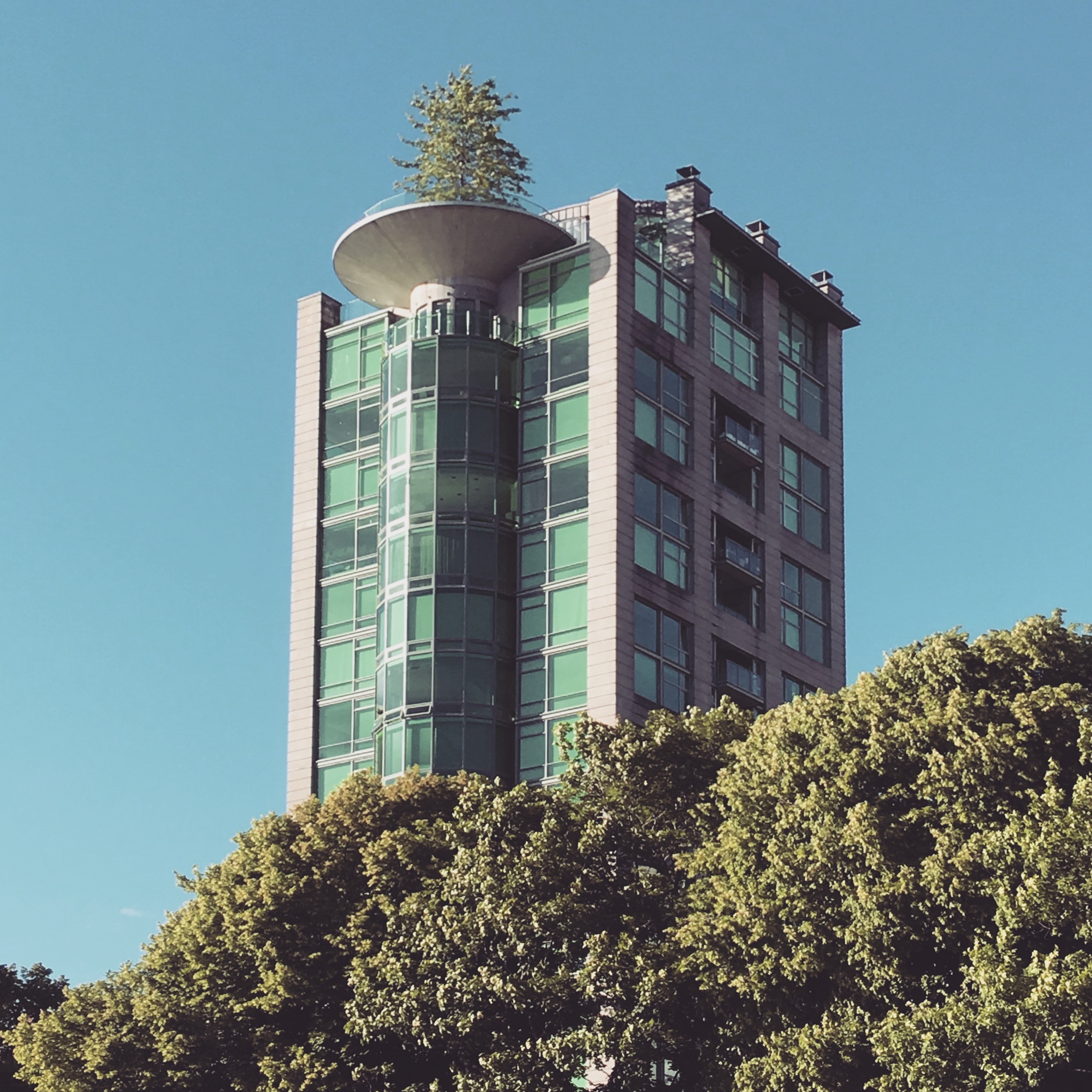
Vancouverism originated at a time of growing opposition to tall buildings. The turning point came in 1984 with the construction of The Sylvia, the first of four residential high rises designed by Richard Henriquez for Vancouver’s West End. With its slim proportions and thoughtful relationship to site, The Sylvia overcame public resistance to towers, enabling those structures to become one of the defining features of Vancouver’s urban landscape. In 1999, Canadian Architect magazine named this high rise one of the most influential Canadian buildings of the twentieth century.
The Sylvia was also an artistic breakthrough of Richard’s. He became a storyteller, combining functional forms with a more complex range of expression and meaning. An accomplished visual artist in his own right, he has continued to blur the lines between art and architecture, introducing elements of painting, sculpture, geomancy, and surrealism to his work. Planners and designers from all over the world now flock to Vancouver for inspiration.
Richard has also become one of Canada’s foremost crusaders for public architectural awareness. He has been a driving force behind the Vancouver Urbanarium Society, a platform for engaging citizens in conversations about urban development.
His achievements have been recognized with many honours, including the Order of Canada, the Gold Medal of the Royal Architectural Institute of Canada, the most prestigious award for lifetime achievement in Canadian architecture, the AIBC Lifetime Achievement Award and two honorary Doctorates from Simon Fraser University and the University of Manitoba.
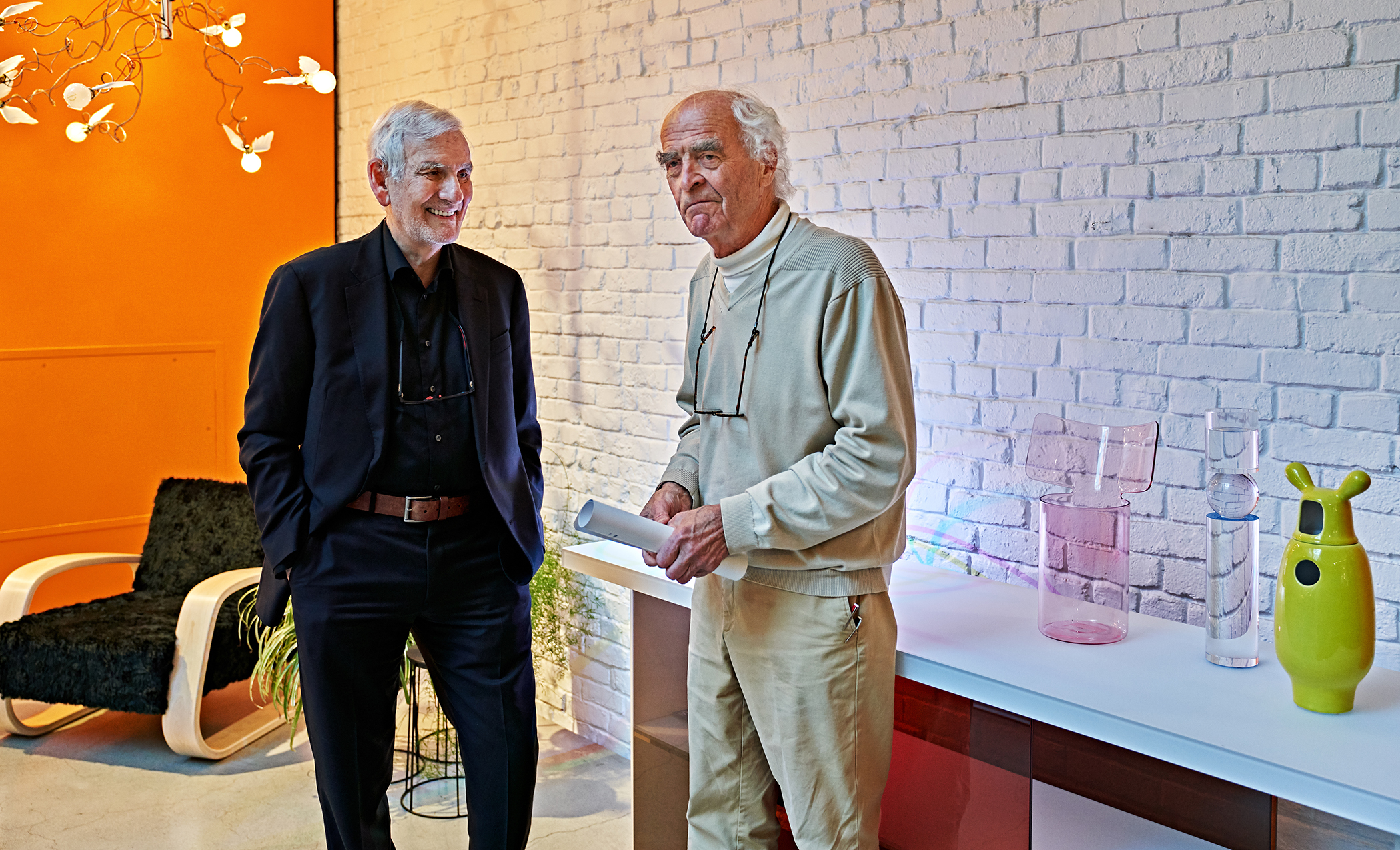
The League’s ‘Masters of West Coast Modernism,” October 4, 2018. Photo by Illijc Albanese.
In 2018, for the League’s “Masters of West Coast Modernism” series, we asked Richard to select mementos of personal and professional significance. These are the items he selected.
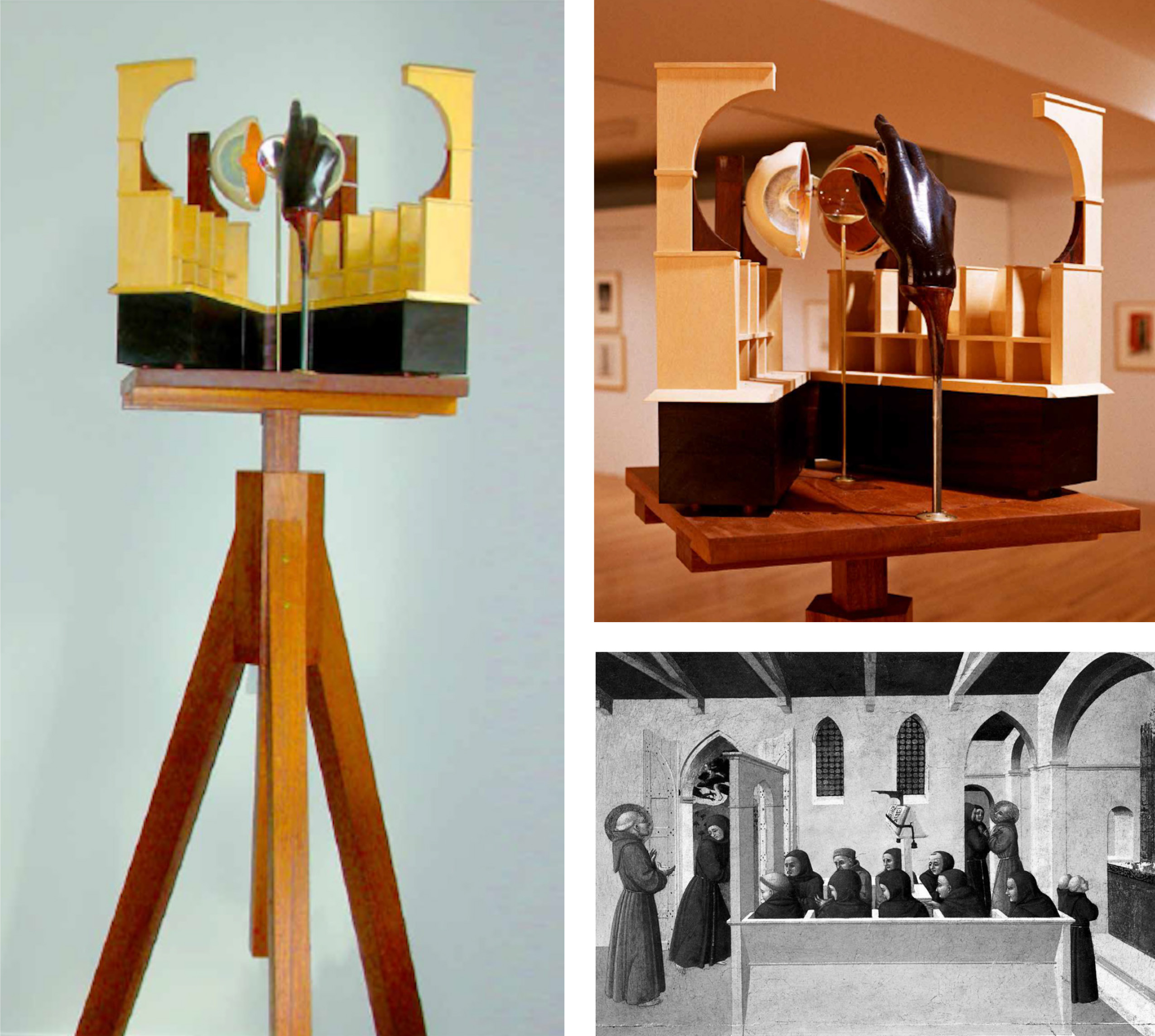
Bern-Paris
Richard Henriquez, Bern-Paris, c. 1993
Mixed media sculpture / 41.6″ x 13″ x 18.5″
[Bottom Right] Stefano di Giovanni di Consolo (il Sassetta), Damnation of the Soul of the Miser of Citerna, c. 1392-1450 or 1451
This sculpture is a memory device that records a trip by Richard Henriquez to Europe in 1992. Having been drawn to a small painting Damnation of the Soul of the Miser of Citerna, in the Louvre in Paris by the Siennese painter Stefano di Giovanni di Consolo, known as il Sassetta (ca. 1392-1450 or 1451), the next day purchasing a hinged anatomical eye in the Flea Market and 3 days later having drawn and measured a tripod in Albert Einstein’s house in Berne, Switzerland, Richard came home and constructed this sculpture.
A model of the pews shown in the painting was made, (hinged to resonate with the hinged eye) and mounted on top of an exact replica of Einstein’s tripod. The final addition was the object that the eye was observing, namely a small wooden golf-club.
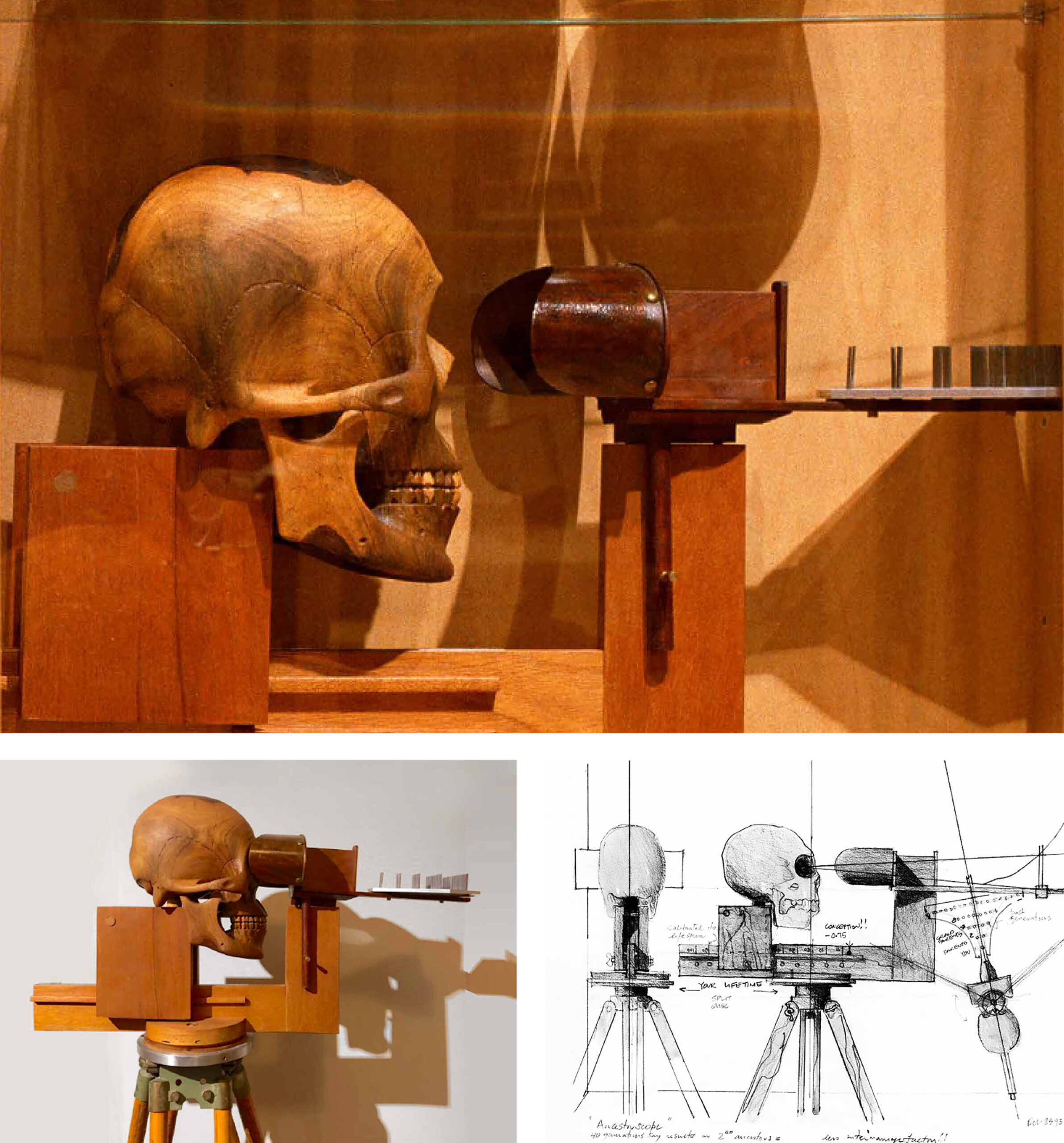
Ancestorscope
Richard Henriquez, Ancestorscope, c. 1993
Mixed media sculpture
Richard Henriquez, Ancestorscope Conceptual Rendering, c. 1993
Pen and ink on paper
This sculpture contemplates the number of ancestors a person has. The head is articulated so that it can be moved closer to the pins that represents one’s ancestors as the years go by. The number of ancestors a person has can be determined by the formula 2 x, (where x is a generation) multiplied by a factor that must be less than one, in order to account for marriages amongst cousins, a common phenomenon in the past in all parts of the world where people lived in small communities and were much less mobile than we are today.
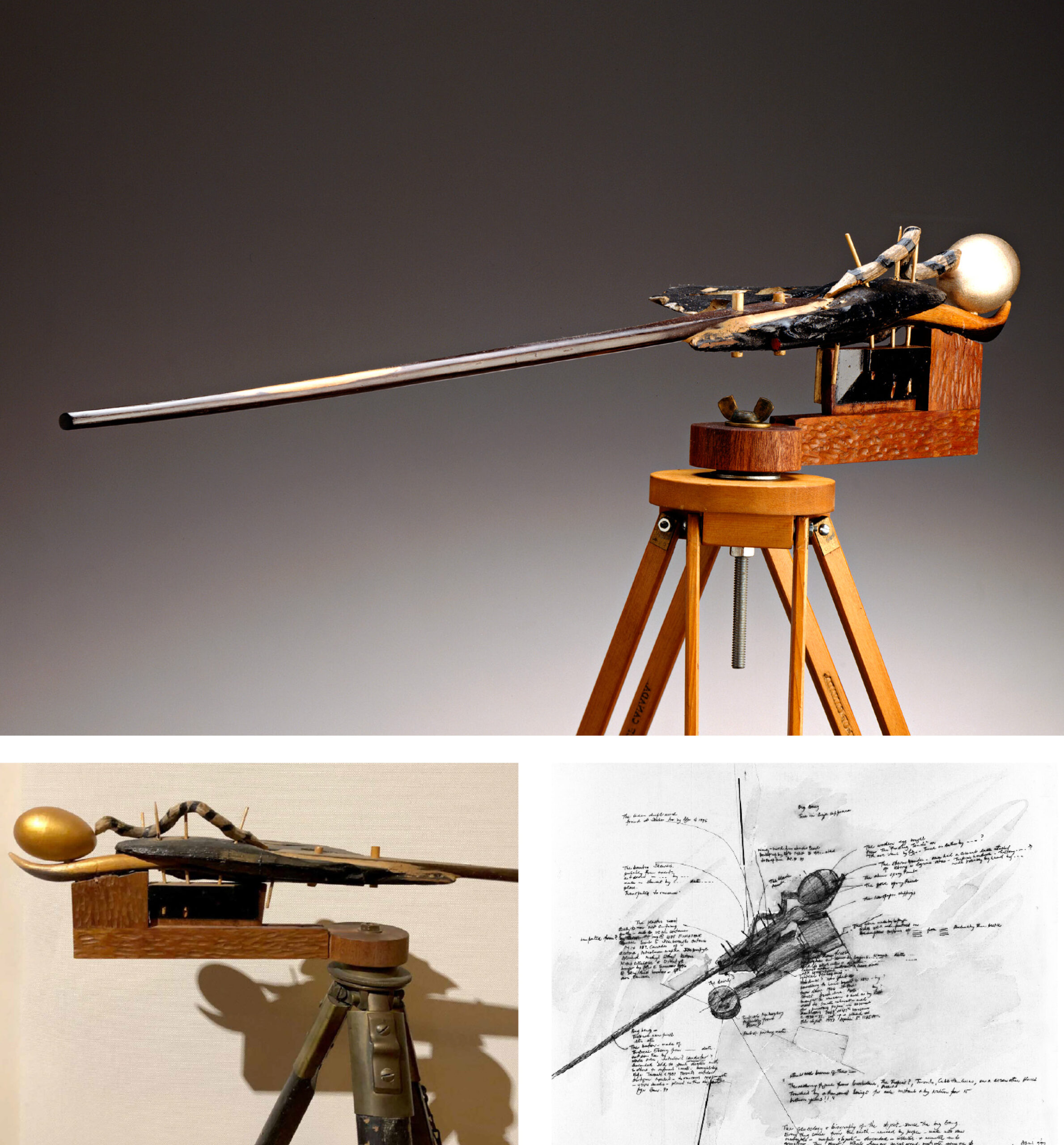
Big Bang
Richard Henriquez, Big Bang, c. 1997
Mixed media sculpture / 80cm x 60cm x 107.5cm
Richard Henriquez, Big Bang Conceptual Rendering, c. 1993
Pen, ink, and watercolour on paper
This sculpture (and an accompanying drawing) traces the geneology of the fragments that are it’s component parts. The result is the realization that the atoms and molecules of each fragment and indeed those in our own bodies (if the cosmologists are to be believed) come from the instant of the Big Bang 13.7 billion years ago!!!
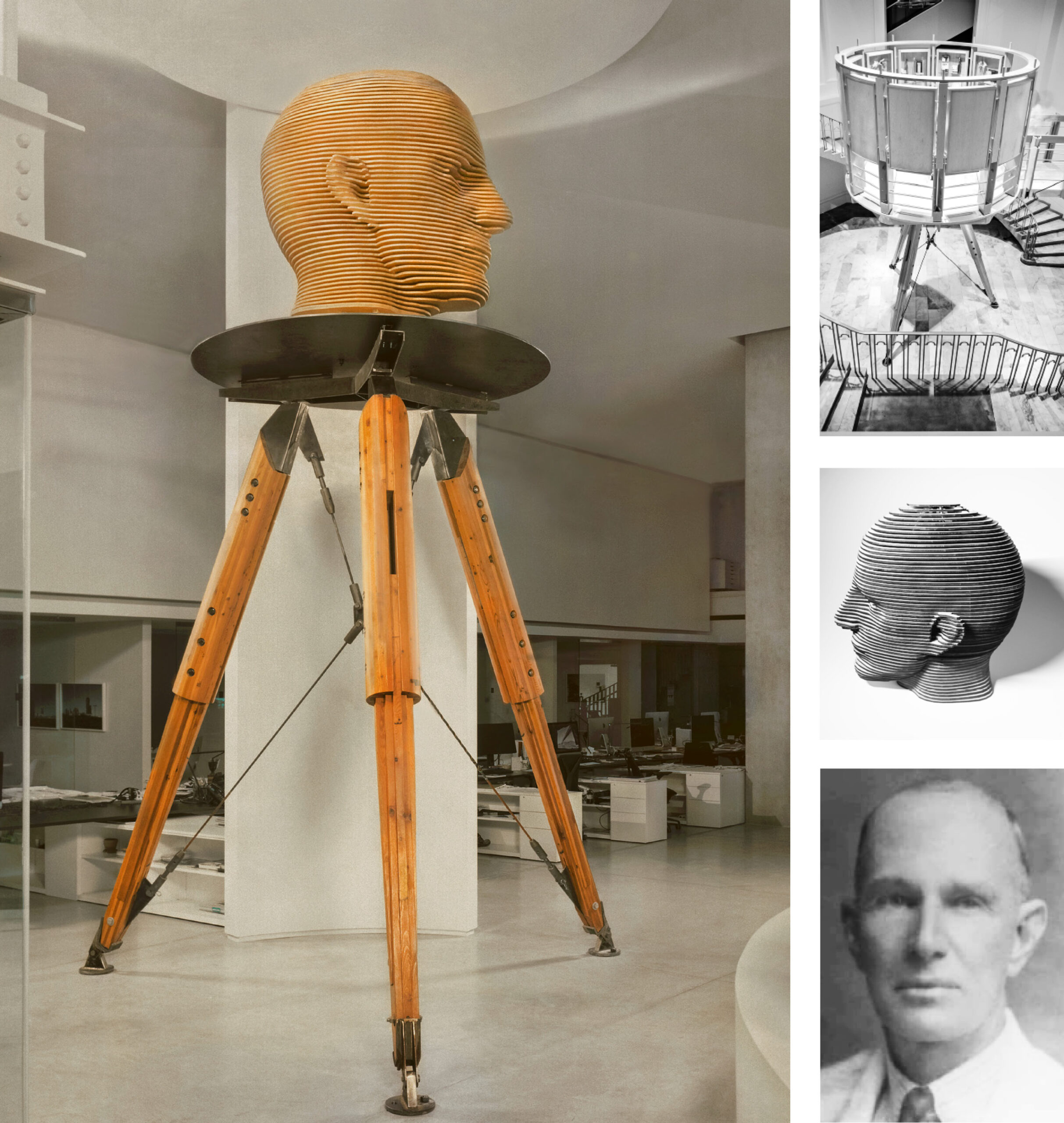
Uncle Dossie
Richard Henriquez, Uncle Dossie, c. 2017
Mixed media tripod sculpture / 16.5′ x 12′ x 12′
[Bottom Right] Rudolph Daniel Cohen Henriques
This sculpture is a model of Uncle Rudolph Daniel Cohen Henriques Architect, the grand-uncle of Richard Henriquez. Uncle Dossie, as he was affectionately called, was the person who inspired Richard to become an architect.
The full-size sculpture measuring 16.5′ x 12′ x 12′ is supported on a CY Loh-designed tripod that supported the Richard Henriquez Memory Theatre that was exhibited at the Vancouver Art Gallery in 1992.
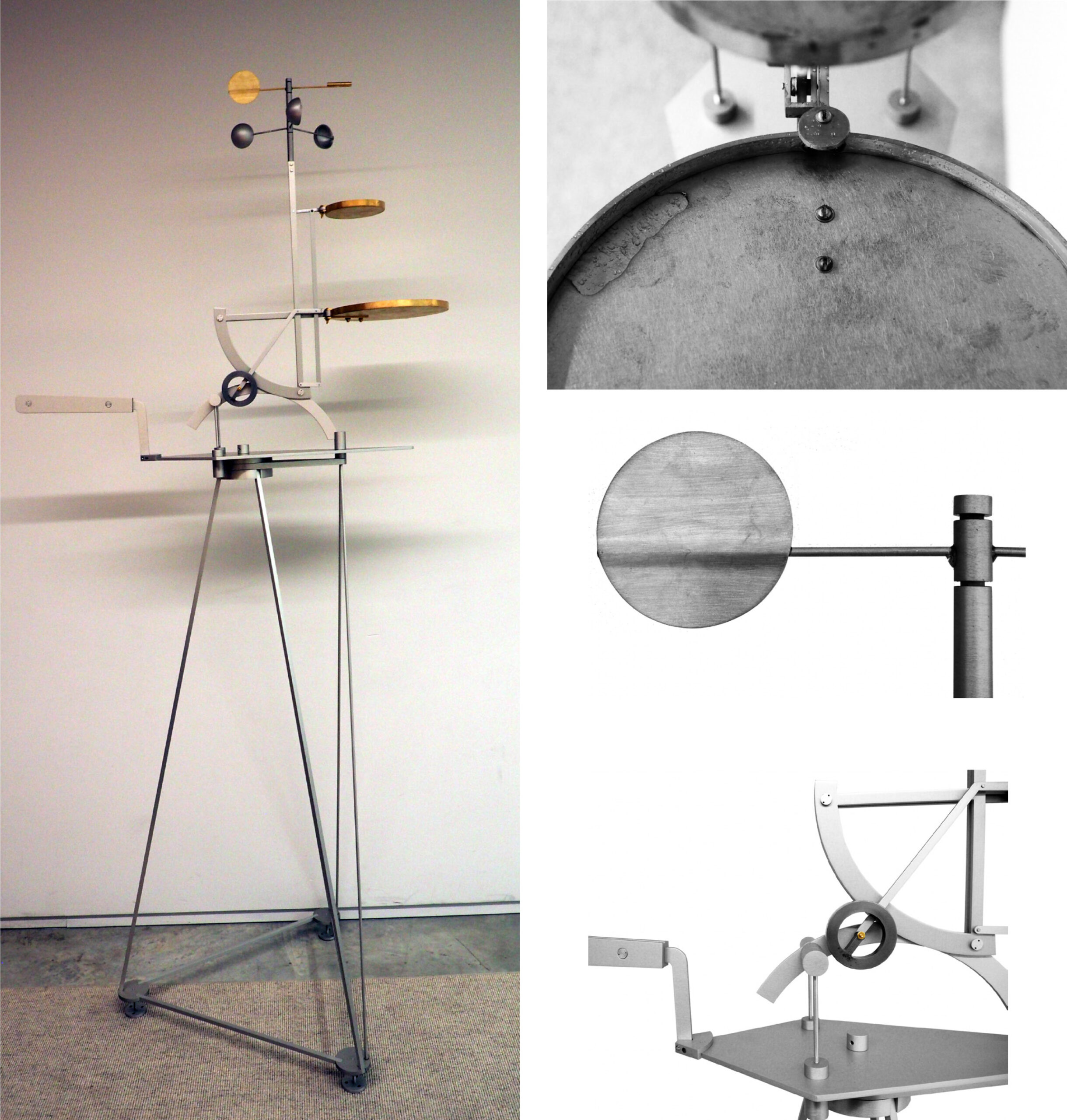
Birdbath Tripod
Richard Henriquez, Birdbath Tripod, c. 2018
Annodized aluminum, stainless steel and bronze / 81.5″ x 37″ x 24″
This outdoor sculpture utilizes antique iconography to create a birdbath topped by a wind-direction and intensity measuring device.
- Richard Henriquez (August 2018). Interviews with Andrew Carnochan and Steve Gairns, West Coast Modern League.
- Richard Henriquez Personal Archives.